The Strict Canonical Code
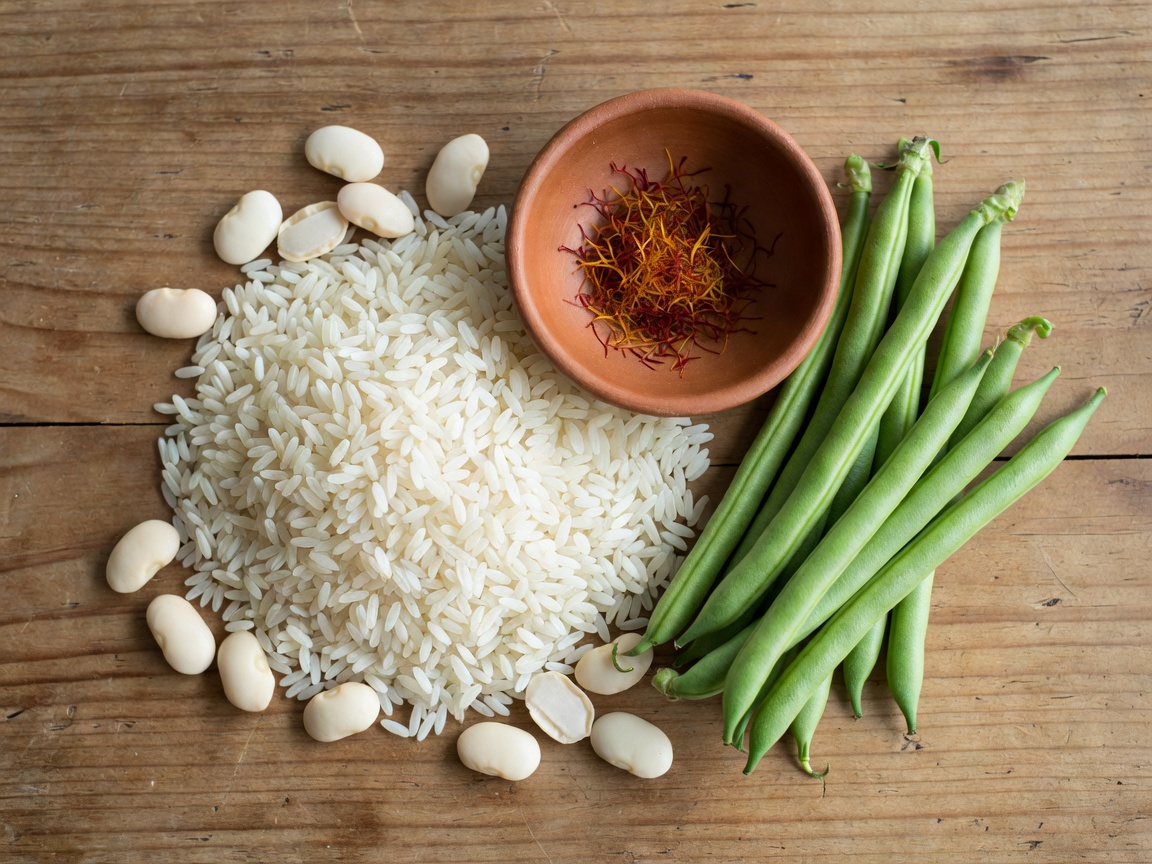
In 2012, the Valencian regional administration codified the official constituents of Paella Valenciana Tradicional. While international restaurants often treat paella as an open canvas featuring peas, chorizo, calamari, or bell peppers, the traditional decree permits only ten baseline ingredients: olive oil, chicken, rabbit, flat green beans (ferraura or bajoqueta), garrofó beans, grated fresh tomato, water, saffron, sweet pimentón (paprika), and short-grain round rice.
Permitted seasonal additions strictly tied to micro-regions include land snails (vaquetes), tender artichokes in winter, and fresh sprigs of wild rosemary picked from the dry inland foothills during the final minutes of cooking. Onions are deliberately and systematically excluded; onion contains excessive water and sugars that soften the rice starch and impede the formation of a dry, crusty base.
The Rice Varieties: Bomba, Senia, and Albufera
The choice of rice determines the entire physical behavior of the dish. Unlike Asian jasmine or basmati (long-grain) or Italian arborio and carnaroli (medium-grain designed to release starch for creaminess), Valencian rice is cultivated under the Denominación de Origen (D.O.) Arroz de Valencia.
| Rice Cultivar |
Liquid Absorption Capacity |
Amylose Content |
Overcooking Tolerance |
Culinary Profile |
| Bomba |
Up to 3:1 (liquid to dry rice) |
High (~24%) |
Exceptional (rarely bursts) |
Maintains structural integrity; ideal for open fires and home cooks. |
| Senia / Bahía |
Approx. 2:1 |
Low-Medium (~16%) |
Low (bursts if overcooked by 2 min) |
Maximum broth flavor absorption, highly delicate, prized by master chefs. |
| Albufera |
Approx. 2.5:1 |
Balanced hybrid |
Moderate to High |
Modern crossbreed offering high flavor uptake with Bomba-like firmness. |
Bomba remains the international gold standard because its grain expands crosswise rather than lengthwise, absorbing massive volumes of saffron-tinted stock without losing tensile firmness. If you are cooking over an unpredictable wood fire, Bomba grants a 3 to 4-minute margin of error before the grain ruptures.
The Legumes: Garrofó and Ferraura
Two specific legumes define the mouthfeel of authentic paella:
- Garrofó (Phaseolus lunatus): A massive, flat, thin-skinned white lima bean native to the Valencian orchard. When fully simmered in rich poultry stock, its interior becomes exceptionally buttery and velvety without disintegrating into mush. If fresh pods are unavailable, authentic dried garrofó soaked for 12 hours must be used rather than standard canned butter beans.
- Bajoqueta or Ferraura (Phaseolus vulgaris): A flat, broad green runner bean with virtually no fibrous strings. It withstands prolonged braising alongside the browning meats, soaking up rendered poultry fat and contributing gentle vegetal sweetness.
The Meats: Rabbit and Chicken
Unlike seaside variants, the inland original relies on small field game and barnyard fowl. Chicken brings collagen, fat, and golden roasting juices from skin contact; rabbit introduces lean muscular depth, subtle wild game notes, and fine bones that enrich the simmering stock. Both meats are chopped into small, bone-in morsels (roughly 3 to 4 cm each) to ensure that marrow and collagen dissolve directly into the cooking medium.
Saffron (Azafrán) vs Artificial Colorants
Traditional cooks insist upon natural Azafrán de La Mancha (D.O.P.). Saffron provides not merely golden yellow hue from crocin, but an unmistakable bitter-honeyed aroma (safranal) that cuts the rich animal fats. Commercial yellow powders (colorante alimentario or tartrazine) yield a garish yellow without a trace of floral aroma or earthy depth.