Spain’s Quintessential Culinary Monument

How to Cook Authentic Valencian Paella

Paella Valenciana is not a casual rice medley; it is a rigorous rural discipline forged over orange-wood fires in the Albufera wetlands. Learn the precise ingredients, the science of caramelization, and the indispensable reason you must never stir the rice.

10 Pillars Canonical Ingredients
18 Minutes Precise Rice Simmer
0 Stirs After Broth Distribution
5 Minutes Mandatory Rest Stage
Comprehensive Methodology

The Five Chapters of Valencian Paella

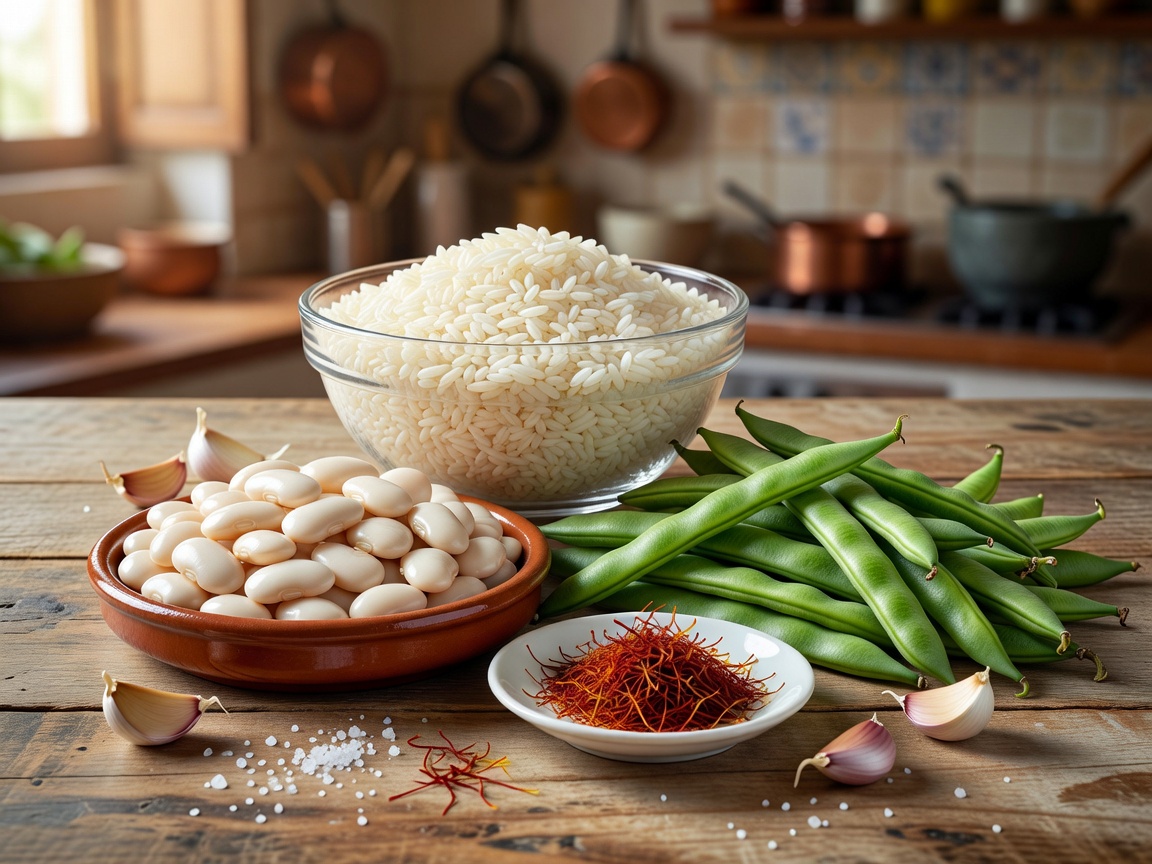
Fresh Valencian paella ingredients including Bomba rice, garrofó beans, flat green beans, and saffron threads
Stage 1 · Sourcing 7 min read

Traditional Ingredients: The Ten Canonical Elements

Why authentic paella never contains chorizo, onions, or seafood. Examine the role of round short-grain Bomba or Senia rice, native flat green beans (bajoqueta), buttery garrofó beans, rabbit, chicken, and pure Spanish saffron threads.
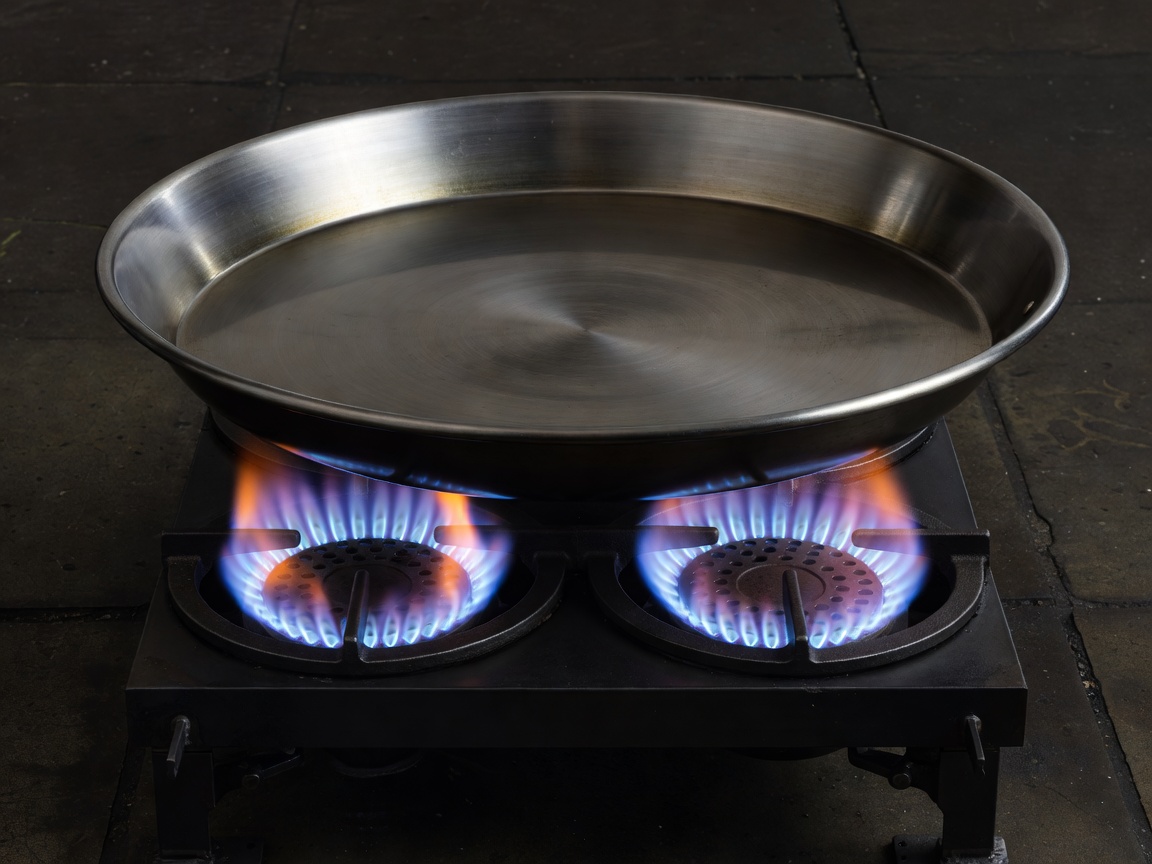
Polished carbon steel paella pan resting level over a dual-ring gas burner
Stage 2 · Equipment 6 min read

Pan Selection & Fire Control: The Geometry of Evaporation

The shallow carbon steel paellera is designed for rapid surface evaporation, not steaming. Learn how pan diameter dictates rice depth, how to level the surface with olive oil, and how to calibrate heat from firewood to multi-ring burners.

Pieces of rabbit and chicken browning deeply in olive oil at the center of a wide paella pan
Stage 3 · Flavor Base 8 min read

Browning Meat & Crafting the Sofrito Foundation

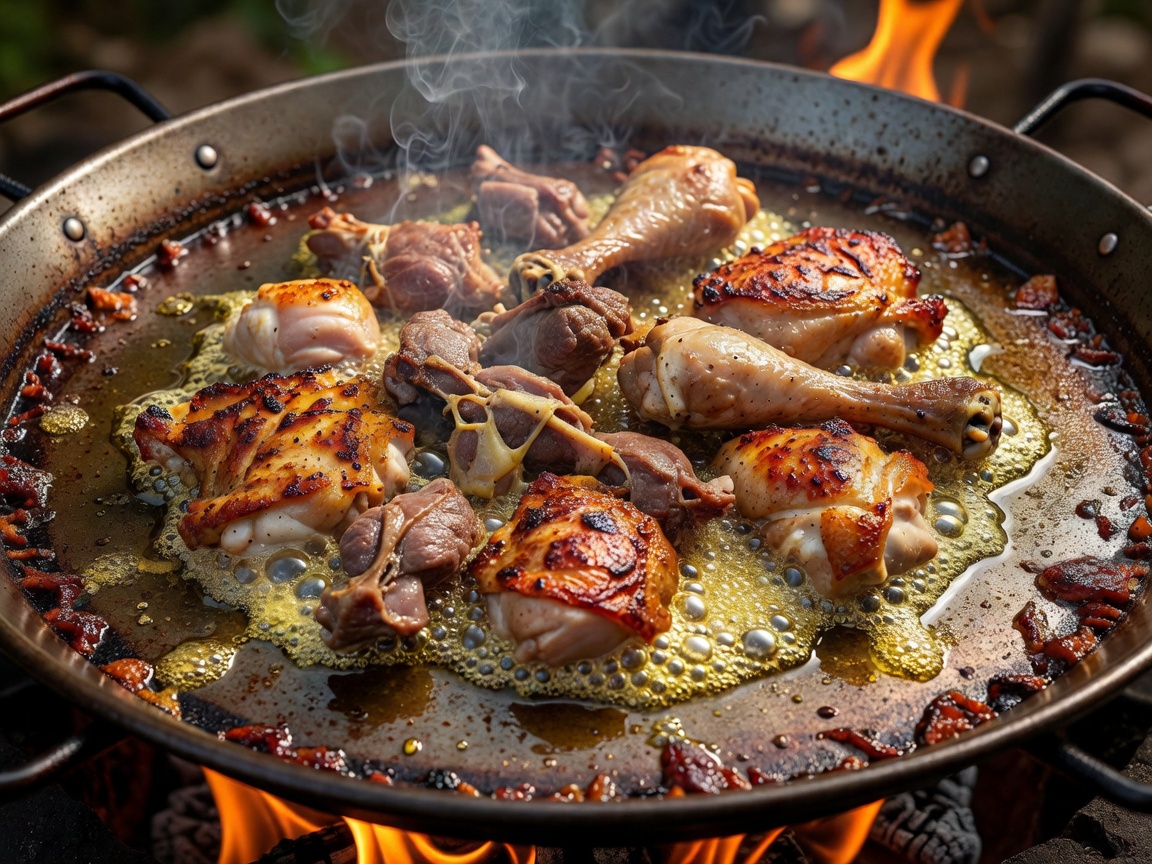
Deep Maillard browning of the rabbit and chicken creates the golden fond that flavors the entire pan. Discover how the meat moves to the outer perimeter while fresh grated tomato and sweet paprika sizzle in the center reservoir.

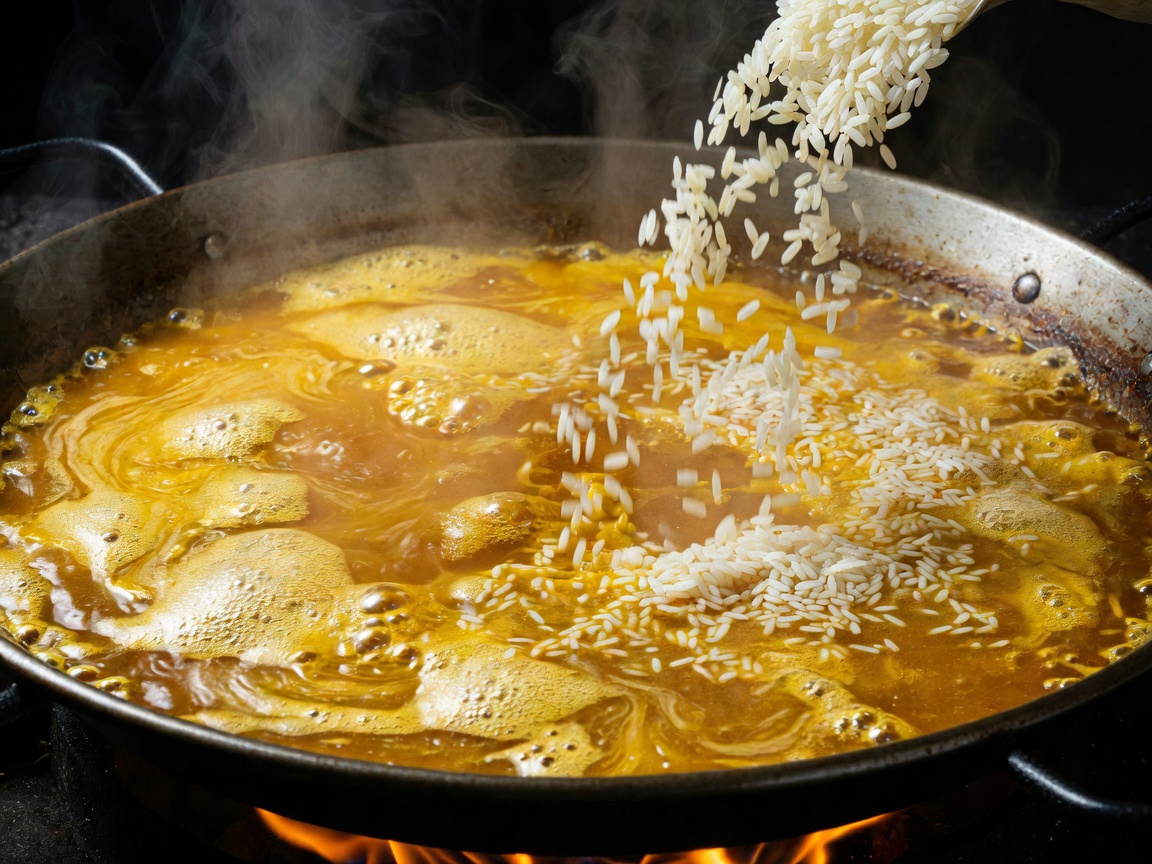
Rice poured diagonally across boiling saffron broth in a wide paella pan
Stage 4 · The Golden Law 8 min read

The Rice Addition & The Critical “No-Stir” Rule

Stirring risotto creates a creamy suspension, but paella requires loose, distinct, toothsome grains. Learn the exact biochemical reason why mechanical agitation destroys paella rice by washing free amylose into the broth.

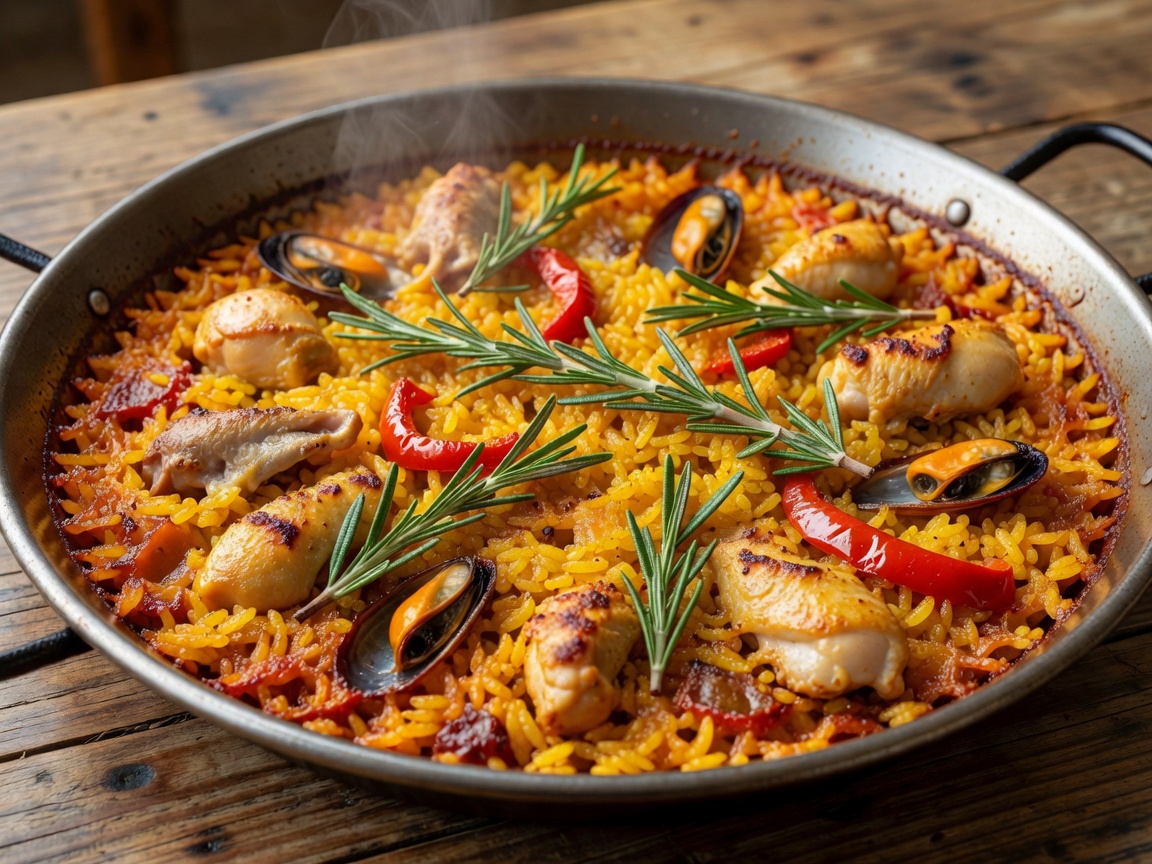
Finished Valencian paella garnished with fresh rosemary showing crispy golden-brown toasted rice at the rim
Stage 5 · Perfection 7 min read

Mastering the Socarrat, Resting & Ritual Serving

How to detect the precise moment the liquid transitions to frying fat through sound and aroma. Learn the crackling auditory cue of socarrat, the vital five-minute resting time, and the etiquette of eating directly from the pan with wooden spoons.

Cultural Heritage & Protocol

Why Official Valencian Heritage Matters

Spain’s official tourism body and the Generalitat Valenciana formally celebrate Paella Valenciana as a protected Bien de Interés Cultural (Good of Cultural Interest). In the towns surrounding Valencia’s Lake Albufera—such as Sueca and El Palmar—paella is not considered dinner; it is an afternoon ritual, traditionally consumed outdoors on Sundays among families and friends.

The worldwide prevalence of mixing shrimp, chorizo, peas, and heavy cream into a single vessel is regarded in Valencia not merely as a modification, but as a completely different preparation known as arroz con cosas (rice with things). True Valencian paella is a celebration of agricultural restraint: the rich fat of rabbit, the gelatin of chicken bone, the creaminess of garrofó beans, and the unique absorbing power of short-grain rice grown in Albufera’s mineral mud.

The Universal Golden Ratio

For a classic 4-serving 42cm pan: approximately 400g of Bomba rice requires 1.2 to 1.4 liters of total liquid, 500g of chicken, 400g of rabbit, 200g of bajoqueta green beans, 100g of dried soaked garrofó, 1 large grated ripe tomato, 100ml extra virgin olive oil, and a generous pinch of crushed saffron.