Mastering the Socarrat, Resting Time, and Ritual Serving
The ultimate mark of a skilled paellero is the socarrat: a parchment-thin, crackling crust of toasted rice that adheres to the steel pan without turning bitter or burnt.
The ultimate mark of a skilled paellero is the socarrat: a parchment-thin, crackling crust of toasted rice that adheres to the steel pan without turning bitter or burnt.
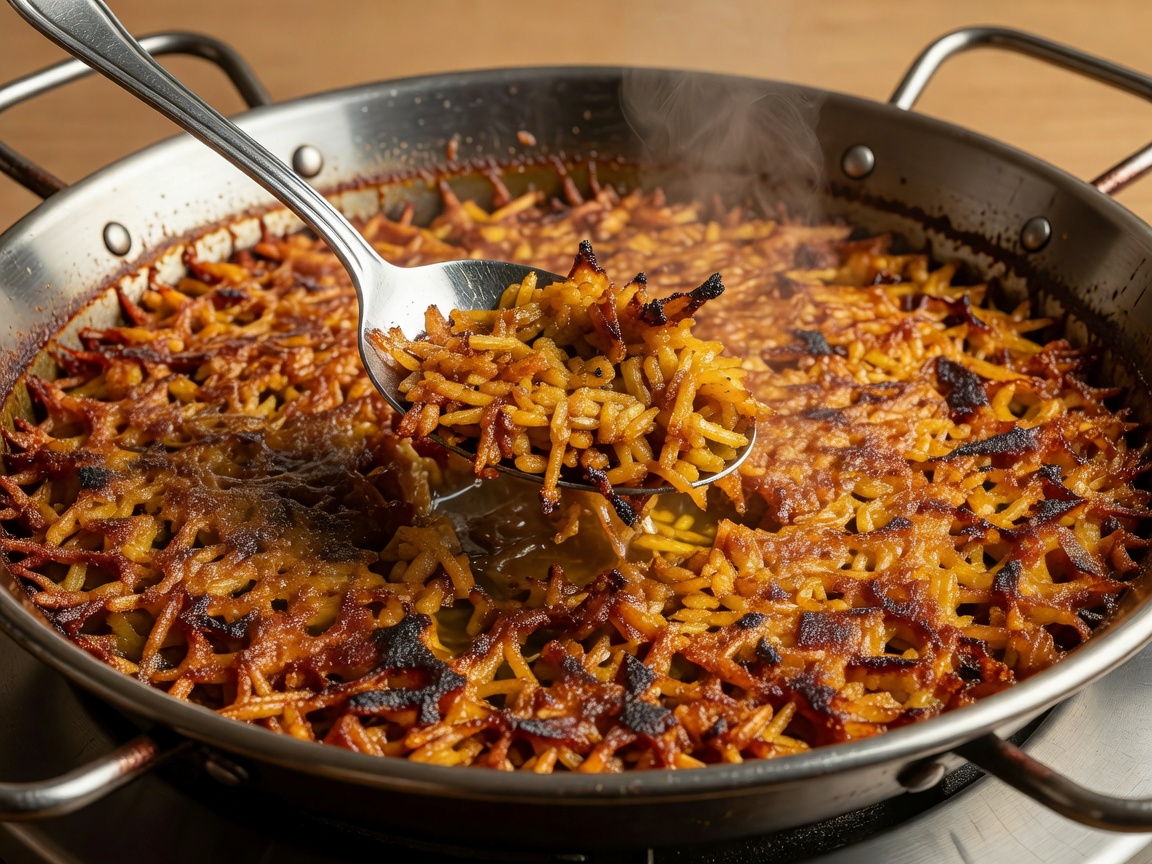
Derived from the Valencian verb socarrar (meaning to singe or scorch lightly), socarrat is not burnt rice. Burnt rice (arroz quemado) is black, acrid, bitter, and inedible. True socarrat is a dark amber, glass-crisp layer created when all free water has evaporated, allowing the remaining olive oil and animal fats to fry the bottom grains directly against the steel.
Because you must never stir or lift large sections of rice, you must rely entirely on your senses of hearing, smell, and tactile resistance:
During the 15th to 17th minute, the wet, churning hiss of boiling liquid suddenly ceases. In its place comes a sharp, rhythmic, popcorn-like crackling sound (el chisporroteo). This sound occurs because water boils at 100°C, but fat fries at 160°C–180°C. That crackle confirms that fat has dropped to the pan floor and is crisping the lower rice kernels.
Lean over the pan. You will detect the intoxicating fragrance of toasted starch, roasted chicken skin, and caramelized saffron. If you smell the slightest sharp hint of acrid carbon, extinguish the fire immediately.
Take a metal tablespoon and gently press the tip straight down to the base in three different spots across the pan. If the spoon slides through soft resistance, moisture remains. If you feel a taut, hard, sandpaper-like resistance that yields a hollow scraping resonance, the socarrat has formed.
During the final 60 seconds of heat, place two small fresh sprigs of wild rosemary on top of the rice. Never cook rosemary into the broth for the entire 18 minutes; doing so overpowers the delicate saffron and chicken with harsh pine camphors. Resting the sprigs on top allows gentle rising steam to infuse an elusive aroma into the upper grains.
Extinguish the fire completely. Paella must now rest undisturbed for 5 to 8 minutes.
This reposo period is not optional:
In traditional rural Valencia, paella is never plated onto individual ceramic dishes. Plating causes heat to dissipate and damages grain structure.
Instead, the hot pan is placed on a round cork or straw trivet directly in the middle of the table. Diners stand or sit around the perimeter, armed exclusively with carved boxwood spoons (cucharas de madera). Metal spoons are forbidden as they impart a metallic taste and scratch the seasoned steel.
Each diner eats strictly from their own triangular wedge of the pan (su parcela), working from the rim toward the center. When everyone reaches the bottom, diners celebrate by enthusiastically scraping up the prize: the crunchy, deeply savory socarrat.
While lemon wedges are traditionally used to decorate the pan rim, purists never squeeze lemon juice over the entire paella before tasting. Lemon acid masks subtle saffron nuances. It is applied only at the diner's personal discretion on their final forkfuls.