The Art of Deep Browning and Sofrito Emulsion
Paella broths are not made in a separate stockpot. The broth is manufactured directly inside the paella pan through aggressive meat browning, vegetable searing, and the reduction of fresh grated tomato.
Paella broths are not made in a separate stockpot. The broth is manufactured directly inside the paella pan through aggressive meat browning, vegetable searing, and the reduction of fresh grated tomato.
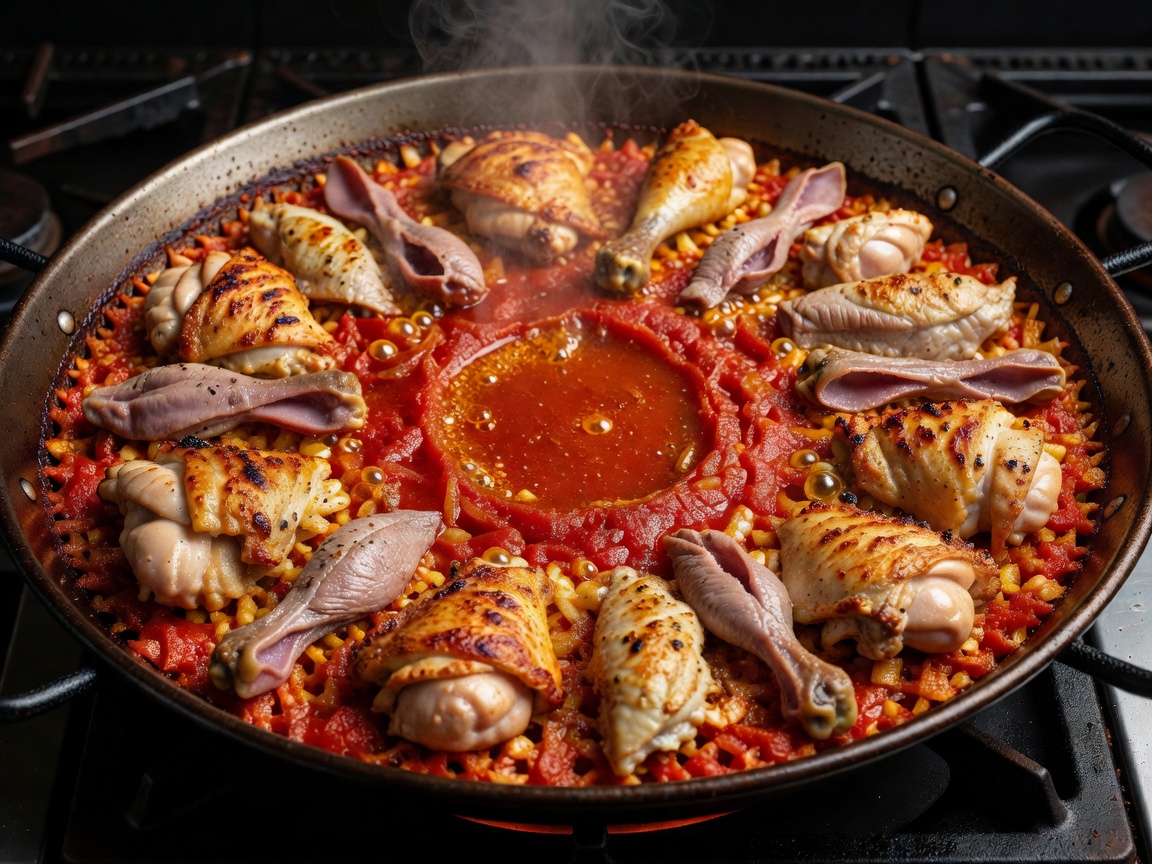
Heat 100ml of high-grade Spanish extra virgin olive oil in the leveled pan over medium heat. Before adding any meat, sprinkle coarse sea salt in a wide ring around the outer, dry rim of the pan. This Valencian habit serves two distinct purposes:
Add the chopped chicken and rabbit pieces to the central oil. Resist the urge to turn them too quickly. The meat must achieve a profound, mahogany-golden color on all facets. This takes at least 15 to 20 minutes of attentive, steady frying.
As proteins and natural fats caramelize, amino acids bond with reducing sugars to leave microscopic dark amber residue on the base of the steel pan (fond). This glaze is the literal soul of the paella; when water is poured in later, the boiling liquid dissolves this residue, producing a naturally rich, dark broth without needing store-bought bouillon cubes or pre-made stock.
Once the meat is dark gold, push every piece to the perimeter rim of the pan, where temperatures are lower. This prevents the cooked meat from burning while freeing the hot center.
Drop the snapped bajoqueta (green beans) and soaked garrofó beans directly into the center oil. Fry the green beans until their emerald skins blister and brown in spots, absorbing rendered chicken fat. After 5 minutes, push the vegetables out toward the meat perimeter.
Clear the central circle of the pan once again. Pour in one large ripe tomato that has been finely grated on a box grater (discarding skin and excess watery seeds).
Simmer the tomato pulp until its water evaporates and the oil separates with a gentle sizzle. Turn down the heat slightly, push the tomato aside, and introduce one level teaspoon of Pimentón Dulce de la Vera (sweet smoked or unsmoked Spanish paprika). Fry the paprika in the residual oil for no longer than 5 to 7 seconds, stirring instantly with the tomato. If paprika burns, it turns irredeemably bitter and permanently ruins the pan's broth.
Immediately after integrating the tomato and paprika, pour cold tap water into the pan up to the level of the side handle rivets (los remaches). Using a wooden paddle or metal spatula, firmly scrape the steel bottom to lift all the browned caramel fond into suspension.
Add the crushed saffron threads. Bring the entire vessel to a furious, rolling boil over high heat for 15 to 20 minutes. As water evaporates down toward the original center baseline, the collagen from chicken bones and rabbit marrow emulsifies with the olive oil and tomato solids, creating a complex, aromatic, golden-red liquid. Taste the broth now: it must taste slightly over-salted, because the unseasoned rice will absorb substantial sodium upon addition.
Traditional Valencian cooks do not use measuring jugs. They fill water to the top of the handle rivets, then boil vigorously until the broth reduces precisely to the halfway mark of those rivets. At that exact visual milestone, the liquid-to-pan volume is calibrated for the rice addition.