Paella Pan Selection and Heat Mastery
A paella is defined by the vessel that bears its name. The geometry of the pan dictates the physics of evaporation, controlling whether rice steams into mush or evaporates into tender, separated perfection.
A paella is defined by the vessel that bears its name. The geometry of the pan dictates the physics of evaporation, controlling whether rice steams into mush or evaporates into tender, separated perfection.
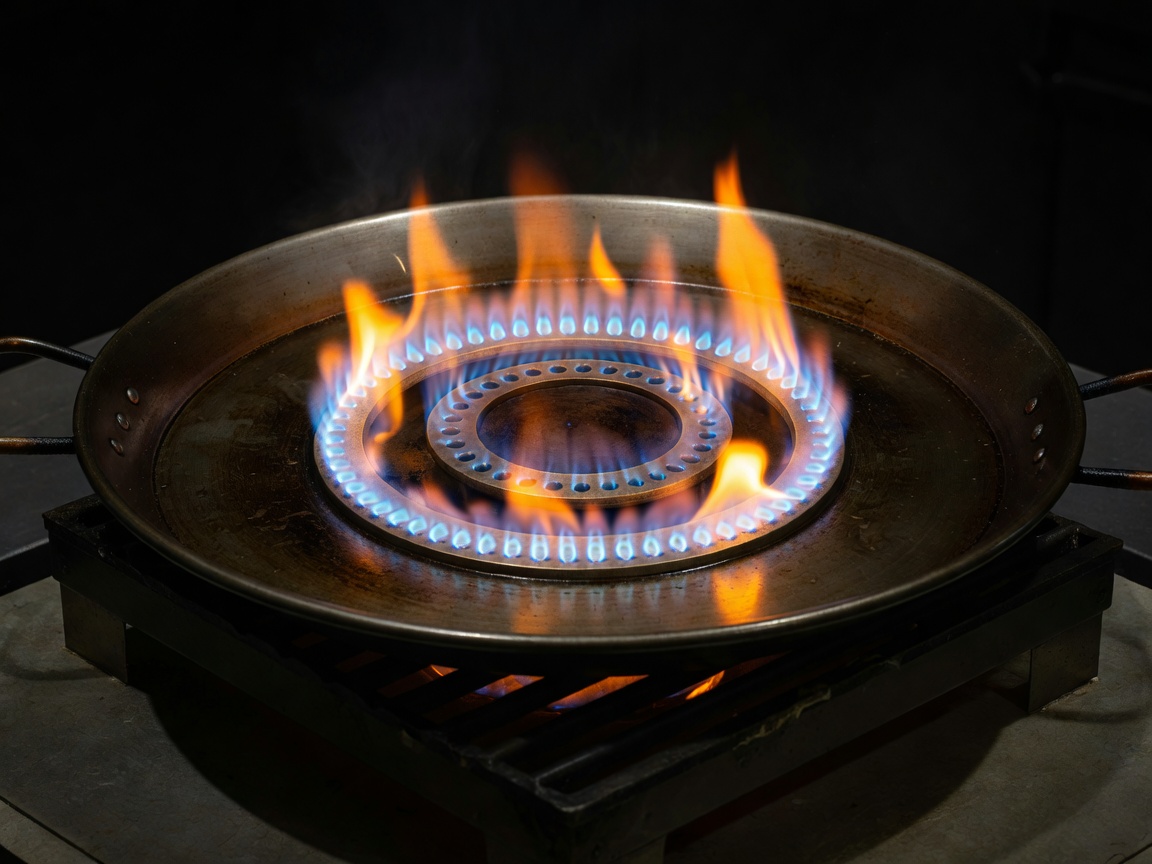
In the Valencian language, the pan itself is called the paella (derived from the Latin patella, meaning flat dish). The vessel features three uncompromising structural attributes:
Selecting the proper material directly impacts your ability to generate the legendary crispy bottom layer known as socarrat.
| Feature | Polished Carbon Steel (Acero Pulido) | Enameled Steel (Acero Esmaltado) | Stainless Steel / Non-stick |
|---|---|---|---|
| Thermal Conductivity | Rapid, highly responsive heat transfer | Moderate, slightly slower response | Poor / uneven hot spots |
| Socarrat Adhesion | Ideal; creates authentic crisp crust | Good; cleaner release, less intense crust | Unacceptable; prevents proper crusting |
| Maintenance | Must be hand-washed, dried immediately, oiled | Dishwasher safe, rust-proof, low effort | Low maintenance |
| Valencian Standard | The purist choice for firewood and gas rings | Widely used in modern home kitchens | Rejected by traditional culinary standards |
The most catastrophic mistake home cooks make is crowding too much rice into a small pan. In Valencia, the layer of cooked rice must never exceed one finger-width (approximately 1.5 cm) in depth. If the rice is several inches thick, the upper layers steam while the lower layers overcook.
Because paella broth must never be stirred after the initial boil, the pan must sit perfectly horizontal. Pour your olive oil into the cold pan at the center. If the oil runs toward one edge, adjust your tripod or burner feet until the pool remains exactly centered. An unleveled pan causes one side to dry out and burn while the lower side remains soupy.
The ancestral fuel is dry orange wood (leña de naranjo). Orange wood provides an intensely aromatic smoke, minimal ash, and a high, lively flame that wraps around the curved flanks of the pan. During the initial 8 minutes of boiling, high wood flames drive vigorous bubbling; as the wood collapses into embers, the heat naturally subsides to a gentle simmer for the final 10 minutes.
For indoor or urban outdoor cooking, a dedicated dual or triple-ring gas paella burner (paellero) hooked to butane or propane is essential. It provides total concentric control, allowing you to blast the center for meat searing and adjust outer rings independently during rice simmering.
Remove the manufacturer's anti-rust lacquer by boiling water in the pan for 10 minutes with a drop of dish detergent. Scrub thoroughly with a non-abrasive pad, dry instantly over a low flame, then rub every interior square centimeter with a paper towel soaked in olive oil. Heat until smoking slightly, wipe clean, and store in a dry space.